Why New Home Closing Documents Matter
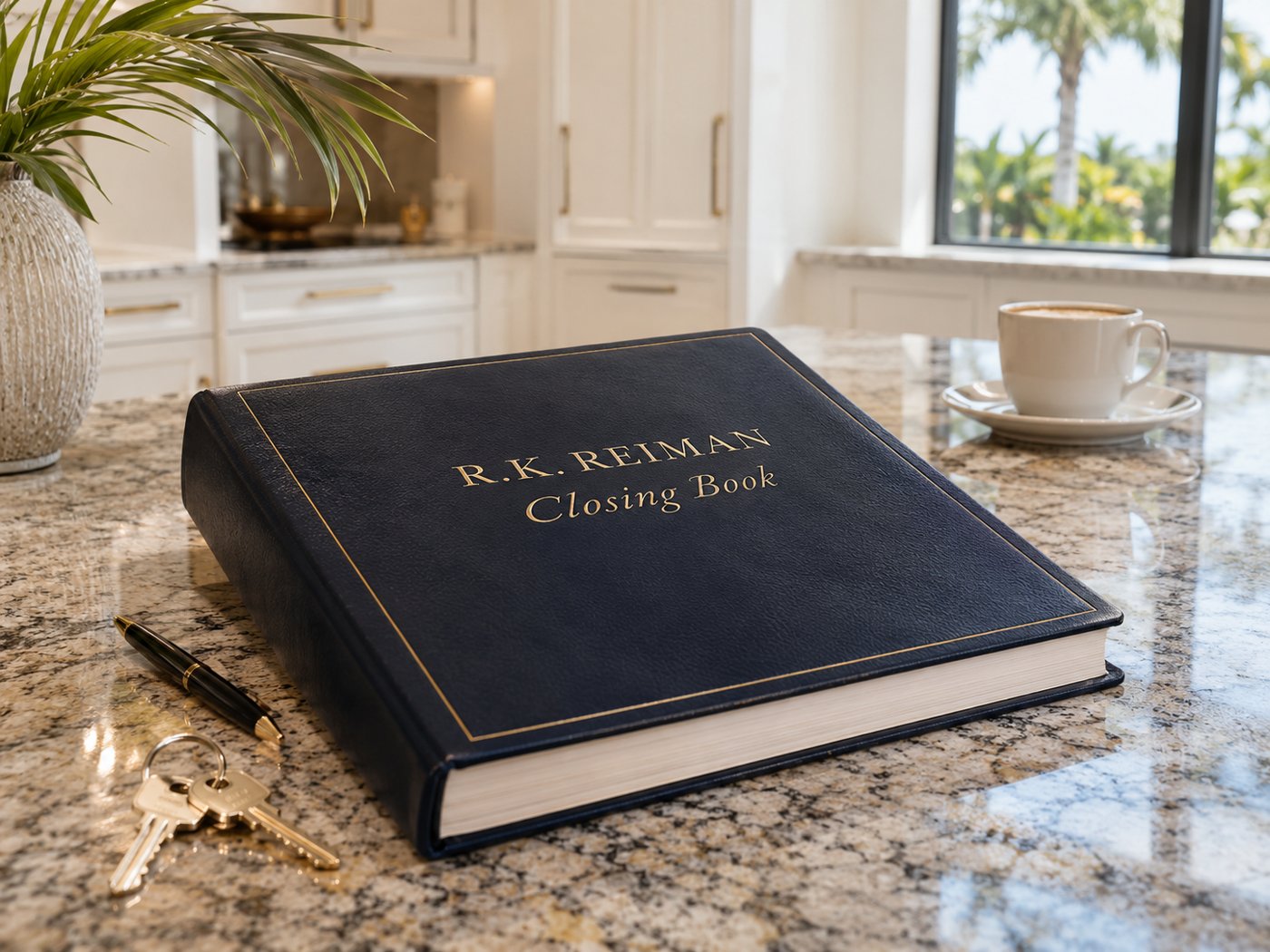
Your new home closing documents are some of the most important papers you will ever own. However, most buyers leave closing with a stack of loose pages and no plan for them. That's why every R.K. Reiman Construction homeowner receives a Closing Book at closing.
The Closing Book puts your survey, elevation certificate, warranties, and building records in one place. As a result, you can find what you need years from now, whether it's for insurance, repairs, or a future sale.
Our Warranty Administrator, Kathy Ward, recently explained how it works in Redfin's guide to real estate closing documents. Below, we take a closer look at what's inside and how to use it.
What's Inside Our Closing Book of New Home Closing Documents
"Each homeowner at the time of closing receives a Closing Book," says Kathy Ward. "It contains everything, including a list of all subcontractors who worked on their home."
Here's what you'll find inside, and why each piece matters.
1. A list of every subcontractor
You'll know exactly who built each part of your home. For example, if a faucet leaks, you can see which plumber installed it. This makes service calls faster and warranty questions easier to answer.
2. Your final survey
The survey shows your property lines and any easements on your lot. Before you add a fence, pool, or lanai, check it first. In addition, it can help settle a boundary question with a neighbor.
3. Your elevation certificate
An elevation certificate records how high your home sits compared to expected flood levels. Insurance agents use it to quote flood coverage, so keep it easy to find. You can learn more in FEMA's guide to elevation certificates.
4. Landscape plans
If a plant dies or you want to expand a garden bed, the plans show what was planted and where. Also, they help any landscaper you hire later.
5. Your paint schedule
Touch-ups are simple when you know the exact color and finish in every room. The schedule covers the exterior too.
6. A homeowner to-do list
We include a short list of tasks for your first weeks in the home. For instance, it reminds you to register every appliance with its manufacturer so your warranties stay active.
7. A maintenance schedule
Some parts of your home need regular care. The schedule tells you what to check and when. As a result, small issues get caught before they turn into costly repairs.
How to Organize Your New Home Closing Documents
The Closing Book is a great start. Still, the homeowners who get the most from it keep adding to it. Here's how to keep your new home closing documents safe and useful.
- Register your appliances in the first week. It only takes a few minutes, and it keeps your warranty coverage active.
- Make a digital copy. Scan or photograph the key pages and save them to the cloud. That way, you can reach them during a storm or while you're away.
- Keep everything together. Your deed, title insurance policy, and closing disclosure belong in the same safe place as your Closing Book.
- Add every receipt and service record. Roof work, HVAC service, upgrades, and permits all help with insurance claims, taxes, and resale.
- Follow the maintenance schedule. Set calendar reminders for each item so nothing slips.
- Pass it on when you sell. A complete home file is a real selling point, because buyers like knowing how a home was built and cared for.
New Home Closing Documents FAQ
Which new home closing documents should I keep forever?
Keep your deed, owner's title insurance policy, survey, elevation certificate, and closing disclosure for as long as you own the home. In addition, keep records of every major improvement.
Where should I store new home closing documents?
Store the originals in a fireproof, waterproof box or safe. Then save digital copies in the cloud so you can reach them from anywhere.
Do I need an elevation certificate if I'm not in a flood zone?
It depends on where you live and your insurance needs. Even so, it's worth keeping, because insurers and future buyers often ask for it.
What should I do with appliance warranties after closing?
Register each appliance with its manufacturer right away. Then file the warranty cards and manuals with your other new home closing documents.
Building a Home With R.K. Reiman Construction
A well-built home deserves good records. That's why the Closing Book is one of the ways we stay with our homeowners long after closing day.
Are you already an R.K. Reiman homeowner with a question about your Closing Book? Contact our warranty team. Thinking about building? Explore our homes, then get in touch to start planning.
Thinking about building? We’ll walk you through it before you commit.
Talk to our team