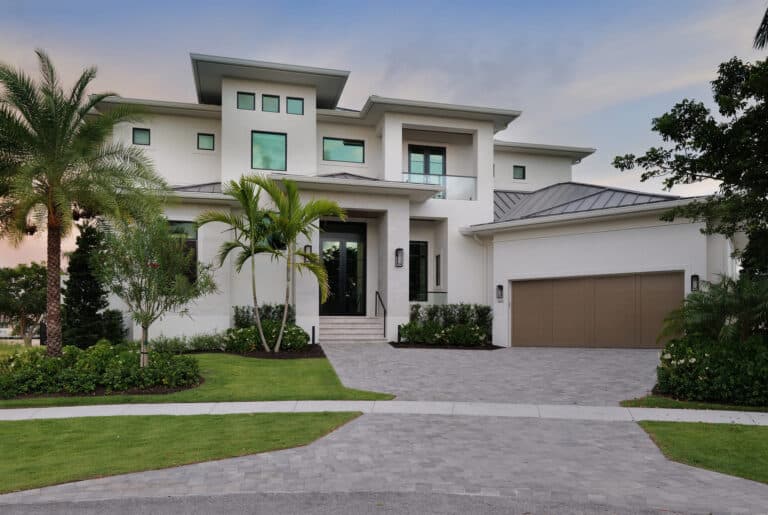
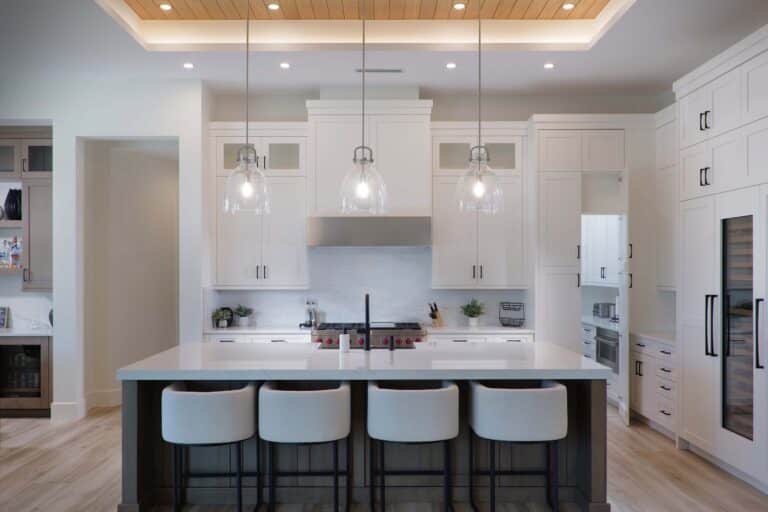
A custom home builder usually can’t give you an honest price per square foot because no two custom homes are the same. The plan, your selections, the design details and the site work all move the final cost. Bill Reiman, owner of R.K. Reiman Construction, builds custom luxury homes on Marco Island and in Naples, Florida. He says a quoted square-foot number tends to end in change orders or cut corners. The better question is what’s included, and how the builder will price it and explain it to you.
In this solo episode of The Real Build podcast, recorded in 2020, Bill explains why builders dread the question, how R.K. Reiman Construction answers it, and what every buyer should check before comparing quotes.
Why do custom home builders dislike the price-per-square-foot question?
Bill hears it a few times a week, and it’s often the first thing a new client asks. He understands why. Building a home is a huge purchase and price matters. But price can’t be the number one factor.
Any builder could name a number per foot and hand over a features list. The problem is that custom clients choose freely. The moment a selection goes outside that list, the number is no longer true. As Bill puts it, there’s no limitation in a custom build, so a fixed square-foot price can’t stay accurate if the builder still wants to deliver what you picked and stay in business.
How is a production builder’s price per square foot different?
Production builders work on a “what you see is what you get” model. You choose from a set menu of selections that fit the builder’s budget. Going outside that menu either costs a lot or isn’t allowed. That control is what lets them advertise a price per square foot.
A custom builder works the other way. At R.K. Reiman Construction, clients go to the vendors and pick from thousands of tile options, any appliances, any plumbing fixtures, and any cabinet style, finish and height. The landscaping is open too. You pay more for that freedom, but you get the home you actually want.
What makes a custom home’s cost hard to pin down up front?
Bill walks through the items that make a single per-foot number unreliable, especially on a coastal island site:
- Plan changes. R.K. Reiman’s house plans are starting points. Most clients move rooms, add space or start from scratch.
- Design details. Working with an interior design firm often adds unique ceiling details or built-in cabinetry that weren’t on the architectural plans.
- Ceilings and trim. Wood beams and cloud ceilings take skilled trim labor that is hard to bid before the design is final.
- Fill dirt. On Marco Island, fill is trucked in from far away. The amount isn’t known until a topographic survey is done, and it can change the stem wall too.
- Pilings. Waterfront homes there sit on pilings. A neighbor’s piling depth is only a guide, and yours can go deeper.
Bill’s point: if he commits to a solid square-foot price without knowing these things, either the builder loses money or the client gets hit with an upcharge later. Neither builds trust.
How does R.K. Reiman Construction answer the question instead?
When someone asks, Bill tells them it’s a challenging question. He can share a rough average, but first he explains why there’s no set number. Then he walks them through the process:
- Design together. Bill sits down with the client to tweak an existing plan or design one from scratch, and keeps an eye on the architect’s work with resale in mind.
- Bid the actual plan. Once the plan is done, he bids it line by line with allowances set high enough that the client is covered for what they told him they want.
- Explain every number. He recently spent two hours going through a bid with a client, line item by line item, showing where every number came from.
- Do the math last. After you know exactly what you’re getting, you can divide by the square footage yourself. Now the number means something.
Many R.K. Reiman homes are built cost-plus: the client pays actual costs month to month plus the builder’s percentage. A fixed price is where the square-foot quote comes from, and going over it means change orders. Read more in our post on cost plus versus fixed price.
Either way, cost increases are shown to the client before they agree to them. Bill’s example: a client was choosing between a Benjamin Moore and a Sherwin-Williams color, one pricier than the other. The team painted both on the house so she could see them in the sun, and she signed off on the one she liked.
What should you check on a builder’s standard features list?
A friend once asked Bill about a builder offering a very low price per square foot. Bill’s first question was whether he had a standard features list. He didn’t. Bill told him to go back and ask for a full, detailed list of what’s included, then review it with a highlighter. Here is what to look for:
- What the price covers. Is the per-foot number for living space under air, or the whole footprint under roof?
- Allowances. Check appliances, cabinets, lighting, plumbing fixtures and landscaping. Shop those categories yourself and see whether the allowance would actually buy what you want. Name-brand fixtures from makers like Moen, Kohler and Delta cost real money.
- Driveway. What material is it, and how wide?
- Windows and doors. Are they hurricane impact rated? What brand?
- Ceilings and trim. Are you getting flat ceilings with no detail, or the trim and ceiling work you saw in the model?
Ask every question before you sign. Otherwise a home quoted at one per-foot price can finish far above it. Our post on why cheap contractors cost you more in the end covers more warning signs.
Is a very low price per square foot a red flag?
Yes, and so is a very high one. Neither number tells you much on its own. What matters is whether the builder can explain every detail and keep you informed throughout the build. Compare builders apples to apples: same plan, same level of finishes, same allowances. Bill also makes a point of knowing what competitors include, so he can show clients what R.K. Reiman Construction does differently. For more, see why the lower price isn’t always the best choice.
What should matter more than the price per square foot?
For Bill, it comes down to details, customer experience and setting expectations up front. He talks with clients throughout the build and after closing, alongside the company’s warranty team. He gives honest advice, even when the cheaper option is the better one. And he shows prospective clients the model home or homes under construction so they can see the difference for themselves.
His summary: R.K. Reiman Construction won’t be the most expensive or the cheapest. The goal is to do the best job possible and stay in the client’s corner for as long as they live in the home. If you’re comparing builders in the area, our guide to the best custom home builders in Naples, Florida is a good place to start.
Key takeaways
- A custom home has no honest fixed price per square foot, because your choices aren’t limited to a set menu.
- Production builders can quote per foot because they restrict selections.
- Site work like fill dirt and pilings, plus design details, can’t be priced exactly before the plan and surveys are done.
- Always ask for a detailed features list and check every allowance against real prices.
- Do the per-foot math after the home is designed and bid, not before.
Episode timestamps
- 0:00 Intro
- 1:12 Why Bill hates this question
- 3:30 Are you actually getting what’s on the list?
- 6:15 What is your value proposition?
- 8:25 How Bill answers “What is your square foot price?”
- 9:40 What is your budget?
- 12:45 Pricing in everything you know
- 15:33 Red flags
- 17:55 Doing more research
- 19:42 Allowance and detail examples
- 23:40 Comparing apples to apples
- 25:40 Customer experience
Frequently asked questions
Why won’t custom home builders give a price per square foot?
Every custom home has a different plan, selections and site conditions. A fixed per-foot price stops being accurate as soon as a client chooses something outside the builder’s standard list, so honest custom builders price the actual plan instead.
Why can production builders quote a price per square foot?
Production builders limit buyers to a set menu of selections that fit their budget. Because the options are controlled, they can advertise a per-foot price.
How should I compare quotes from different builders?
Ask each builder for a detailed standard features list and compare apples to apples: the same plan, finish level and allowances. Check whether the price is for living space under air or the full footprint under roof.
What allowances should I check in a builder’s quote?
Check the allowances for appliances, cabinets, lighting, plumbing fixtures and landscaping, then price those items yourself to see whether the allowance covers what you want.
Is a low price per square foot a red flag?
It can be. A price that is far lower or far higher than other builders is worth questioning. A good builder should be able to explain every number and detail in the quote.
What makes building on Marco Island harder to price?
Fill dirt has to be trucked in and the amount isn’t known until a topographic survey is done. Homes there are also built on pilings, and the depth each piling needs can vary from lot to lot.
Learn more
- Watch the full episode on YouTube
- Follow Bill Reiman on Instagram
- Read 20 things to look for before building a new home
Thinking about building? We’ll walk you through it before you commit.
Talk to our team